Saturday, 18 July 2015
Marvelous Grass Sculptures
------------------------
------------------------------
-----------------------------------
---------------------------------------
------------------------------------
-----------------------------------------
-------------------------------------------
-----------------------------------------------
-------------------------------------------
---------------------------------------------------
------------------------------------------------------
----------------------------------------------------
----------------------------------------------------------
------------------------------------------------------------
-----------------------------------------------------------
-------------------------------------------------------------
---------------------------------------------------
----------------------------------------------------------
---------------------------------------------------------------------
-------------------------------------------------------------------------------
source: http://www.architectureartdesigns.com/22-marvelous-grass-sculptures/
Friday, 17 July 2015
Antonio Corradini
--------------
Antonio Corradini (19 October 1688, Venice – 12 August 1752, Naples) was a Venetian Rococo sculptor. Corradini was born in Venice and worked mainly in the Veneto, but also completed commissions for work outside Venice, including Vienna or Naples, where he died.
Much of the information on Corradini early life is contradictory, including that surrounding his date of birth. According to recent scholarship, he was the son of Gerolamo Corradini, a professional veler (packer of sails for ships), and his wife Barbara, and born in the parish of SS. Vito and Modesto. His family was modest.
Corradini was apprenticed to the sculptor Antonio Tarsia (1663 - ca 1739), for whom he worked probably for four or five years starting at the age of fourteen or fifteen (this was the norm at the time). He later became his son-in-law.
Corradini seems to have come into his own as a sculptor around 1709. That year he was employed on work for the façade of the church of San Stae in Venice. Two years later, in 1711, he was recorded as having been enrolled in the Arte dei Tagliapietra as one of the sculptors. By 1713 he had finally set up his own workshop and was working on the state of St. Anastasia in Zara for the church of San Donato.
In 1723, Corradini reputedly became the first person to legally separate the art of sculptors from the profession of stonemasons, forming part of a college that was established in 1724. He was faced with the task of guiding the new artistic profession through its infancy. In 1725-26 he was appointed curator of the laws of the institution and became its prior in 1727.
In the mid-1720s Corradini was awarded a number of commissions in Italy. He completed a number of sculptures for the Manin monument in the Cathedral of Udine and the church of San Giacomo di Udine and the altar of the Blessed Sacrament in the cathedral of Este (1722–25), which was his work entirely. From 1724-28 he worked in Venice on the restoration of the stairway and the sculptures of the Doge's Palace and the facade of the clock tower in the Piazza San Marco. After his wax model was chosen by the Signoria, between 1719-29 Corradini supervised the reconstruction of the bucintoro and completed a few wood carvings for it.
Move to Austria
In 1729-30, Corradini moved to Vienna, the capital of the Austrian Empire of the Habsburgs, where he was named court sculptor in 1733 and awarded a salary of 1700 florins a year and a housing allowance of 500 florins. He would be based there through the early 1740s. The emperor Charles VI entrusted him with the realization of the Bundesladendenkmal, or monument of the Ark of the Covenant, in Győr, in what is now northwestern Hungary, and in 1735 he worked after a drawing of Joseph Emanuel Fischer von Erlach on a modelleto for tomb of St. Johann Nepomuk in Prague, executed by the silversmith Johann Joseph Würth in St. Vitus Cathedral of the Prague Castle.
Corradini completed a large number of works in Vienna itself during these years. Charles VI employed him in the decoration of the Josephbrunnen and, later, Corradini sculpted four figures for the two side altars below the dome of the Karlskirche and designed and supervised the construction of a wooden theater for animal fights called the Hetztheater. In 1736, together with Antonio Galli Bibbiena, he was named court designer for the bullfights that were held there, and on 14 April 1738 an imperial decree appointed Galli Bibbiena, Corradini, and Antonio Lopez jointly to the post of managers of the theater, which was used until 1749.
Move to Rome
On the death of Emperor Charles VI in 1740 and his wife in 1741, and the death of Fischer von Erlach in 1742, Georg Raphael Donner became the most prominent sculptor in Vienna. Corradini entered a period of crisis. In 1740 he briefly visited Rome, then in late 1742 he returned first to Venice and then to Rome, where shared room and board with Giovanni Battista Piranesi, even though the Austrian empress Maria Theresa reconfirmed him as court sculptor. On 23 January 1743 Corradini asked permission to stay in Rome permanently with the option of returning to Vienna.
In Rome, he devoted himself to sculpting a Veiled Vestal, achieved without a commission from any patron (it remained unsold), and was involved in the problem of the restoration of the dome of St. Peter's Basilica. Corradini designed eight models of colossal statues with which it was proposed to place at the foot of the drum of the dome make it more resistant to centrifugal force. He also sculpted a bust of Pope Benedict XIV and other minor works.
Naples
In 1744 Corradini moved for the last time, to Naples, to work on the sculpture for the Sansevero Chapel (Capella Sansevero de' Sangri or Pietatella) in central Naples, at the request of Raimondo di Sangro, Prince of Sansevero VII, who like Corradini was also a Mason, but unfortunately died at the early age of 23. Corradini's work on the chapel is a very complex and intricate decoration of statues, pedestals, altar frontals, round and bas-reliefs, for which he prepared 36 models in clay.
In 1750, he completed Veiled Truth (also called Modesty or Chastity) a remarkable tomb monument dedicated to Cecilia Gaetani dell'Aquila d'Aragona, mother of Raimondo de Sangro. Not only is it a technically inspired work, but the conceit of modesty shielded by the flimsiest of veils creates an alluring but ironic tension, perhaps one somewhat unmerited for a chapel funerary monument, but one that does compel remembrance. Another work of his, Christ Veiled under a Shroud, found in the same chapel, was subsequently completed by Giuseppe Sanmartino (1720–1793). The same artifice of "veiled" marble is utilized.
The Sansevero Chapel remains unfinished because of Corradini's death on 12 August 1752 in Naples. He was buried there in the parish church of Santa Maria della Rotonda on the same day.
-----------------------------------------------
Antonio Corradini (19 October 1688, Venice – 12 August 1752, Naples) was a Venetian Rococo sculptor. Corradini was born in Venice and worked mainly in the Veneto, but also completed commissions for work outside Venice, including Vienna or Naples, where he died.
Much of the information on Corradini early life is contradictory, including that surrounding his date of birth. According to recent scholarship, he was the son of Gerolamo Corradini, a professional veler (packer of sails for ships), and his wife Barbara, and born in the parish of SS. Vito and Modesto. His family was modest.
Corradini was apprenticed to the sculptor Antonio Tarsia (1663 - ca 1739), for whom he worked probably for four or five years starting at the age of fourteen or fifteen (this was the norm at the time). He later became his son-in-law.
Corradini seems to have come into his own as a sculptor around 1709. That year he was employed on work for the façade of the church of San Stae in Venice. Two years later, in 1711, he was recorded as having been enrolled in the Arte dei Tagliapietra as one of the sculptors. By 1713 he had finally set up his own workshop and was working on the state of St. Anastasia in Zara for the church of San Donato.
In 1723, Corradini reputedly became the first person to legally separate the art of sculptors from the profession of stonemasons, forming part of a college that was established in 1724. He was faced with the task of guiding the new artistic profession through its infancy. In 1725-26 he was appointed curator of the laws of the institution and became its prior in 1727.
In the mid-1720s Corradini was awarded a number of commissions in Italy. He completed a number of sculptures for the Manin monument in the Cathedral of Udine and the church of San Giacomo di Udine and the altar of the Blessed Sacrament in the cathedral of Este (1722–25), which was his work entirely. From 1724-28 he worked in Venice on the restoration of the stairway and the sculptures of the Doge's Palace and the facade of the clock tower in the Piazza San Marco. After his wax model was chosen by the Signoria, between 1719-29 Corradini supervised the reconstruction of the bucintoro and completed a few wood carvings for it.
Move to Austria
In 1729-30, Corradini moved to Vienna, the capital of the Austrian Empire of the Habsburgs, where he was named court sculptor in 1733 and awarded a salary of 1700 florins a year and a housing allowance of 500 florins. He would be based there through the early 1740s. The emperor Charles VI entrusted him with the realization of the Bundesladendenkmal, or monument of the Ark of the Covenant, in Győr, in what is now northwestern Hungary, and in 1735 he worked after a drawing of Joseph Emanuel Fischer von Erlach on a modelleto for tomb of St. Johann Nepomuk in Prague, executed by the silversmith Johann Joseph Würth in St. Vitus Cathedral of the Prague Castle.
Corradini completed a large number of works in Vienna itself during these years. Charles VI employed him in the decoration of the Josephbrunnen and, later, Corradini sculpted four figures for the two side altars below the dome of the Karlskirche and designed and supervised the construction of a wooden theater for animal fights called the Hetztheater. In 1736, together with Antonio Galli Bibbiena, he was named court designer for the bullfights that were held there, and on 14 April 1738 an imperial decree appointed Galli Bibbiena, Corradini, and Antonio Lopez jointly to the post of managers of the theater, which was used until 1749.
Move to Rome
On the death of Emperor Charles VI in 1740 and his wife in 1741, and the death of Fischer von Erlach in 1742, Georg Raphael Donner became the most prominent sculptor in Vienna. Corradini entered a period of crisis. In 1740 he briefly visited Rome, then in late 1742 he returned first to Venice and then to Rome, where shared room and board with Giovanni Battista Piranesi, even though the Austrian empress Maria Theresa reconfirmed him as court sculptor. On 23 January 1743 Corradini asked permission to stay in Rome permanently with the option of returning to Vienna.
In Rome, he devoted himself to sculpting a Veiled Vestal, achieved without a commission from any patron (it remained unsold), and was involved in the problem of the restoration of the dome of St. Peter's Basilica. Corradini designed eight models of colossal statues with which it was proposed to place at the foot of the drum of the dome make it more resistant to centrifugal force. He also sculpted a bust of Pope Benedict XIV and other minor works.
Naples
In 1744 Corradini moved for the last time, to Naples, to work on the sculpture for the Sansevero Chapel (Capella Sansevero de' Sangri or Pietatella) in central Naples, at the request of Raimondo di Sangro, Prince of Sansevero VII, who like Corradini was also a Mason, but unfortunately died at the early age of 23. Corradini's work on the chapel is a very complex and intricate decoration of statues, pedestals, altar frontals, round and bas-reliefs, for which he prepared 36 models in clay.
In 1750, he completed Veiled Truth (also called Modesty or Chastity) a remarkable tomb monument dedicated to Cecilia Gaetani dell'Aquila d'Aragona, mother of Raimondo de Sangro. Not only is it a technically inspired work, but the conceit of modesty shielded by the flimsiest of veils creates an alluring but ironic tension, perhaps one somewhat unmerited for a chapel funerary monument, but one that does compel remembrance. Another work of his, Christ Veiled under a Shroud, found in the same chapel, was subsequently completed by Giuseppe Sanmartino (1720–1793). The same artifice of "veiled" marble is utilized.
The Sansevero Chapel remains unfinished because of Corradini's death on 12 August 1752 in Naples. He was buried there in the parish church of Santa Maria della Rotonda on the same day.
-----------------------------------------------
The Veiled Virgin by Giovanni Strazza
The Veiled Virgin
year unknown
Type Carrara Marble
Dimensions 48 cm (19 in)
Location Presentation Convent, St. John's
The Veiled Virgin is a Carrara marble statue carved in Rome by Italian sculptor Giovanni Strazza, depicting the bust of a veiled Blessed Virgin Mary. The exact date of the statue's completion is unknown.
The statue was transported to Newfoundland in 1856, as recorded on December 4 in the diary of Bishop John Thomas Mullock:
"Received safely from Rome, a beautiful statue of the Blessed Virgin Mary in marble, by Strazza. The face is veiled, and the figure and features are all seen. It is a perfect gem of art."
The Veiled Virgin was then kept at the Episcopal Palace next to the Roman Catholic Cathedral in St. John's until 1862, when Bishop Mullock presented it to Mother Mary Magdalene O'Shaughnessy, the Superior of Presentation Convent. The bust has since remained under the care of Presentation Sisters, in Cathedral Square, St. John's.
Italian nationalism was on the rise in the mid-19th century. Strazza's Veiled Virgin is a prime example of the Italian nationalist art movement called Risorgimento. The image of the veiled woman was intended to symbolize Italy just as Britannia symbolized Britain, Hibernia symbolized Ireland, and Lady Liberty symbolized the United States. Pietro Rossi and Raffaelle Monti were the most important Italian contemporaries of Strazza who also sculpted veiled women.
year unknown
Type Carrara Marble
Dimensions 48 cm (19 in)
Location Presentation Convent, St. John's
The Veiled Virgin is a Carrara marble statue carved in Rome by Italian sculptor Giovanni Strazza, depicting the bust of a veiled Blessed Virgin Mary. The exact date of the statue's completion is unknown.
The statue was transported to Newfoundland in 1856, as recorded on December 4 in the diary of Bishop John Thomas Mullock:
"Received safely from Rome, a beautiful statue of the Blessed Virgin Mary in marble, by Strazza. The face is veiled, and the figure and features are all seen. It is a perfect gem of art."
The Veiled Virgin was then kept at the Episcopal Palace next to the Roman Catholic Cathedral in St. John's until 1862, when Bishop Mullock presented it to Mother Mary Magdalene O'Shaughnessy, the Superior of Presentation Convent. The bust has since remained under the care of Presentation Sisters, in Cathedral Square, St. John's.
Italian nationalism was on the rise in the mid-19th century. Strazza's Veiled Virgin is a prime example of the Italian nationalist art movement called Risorgimento. The image of the veiled woman was intended to symbolize Italy just as Britannia symbolized Britain, Hibernia symbolized Ireland, and Lady Liberty symbolized the United States. Pietro Rossi and Raffaelle Monti were the most important Italian contemporaries of Strazza who also sculpted veiled women.
Wednesday, 15 July 2015
Top 10 Worst places to live in England 2015:
--------------
http://www.dailymail.co.uk/femail/articl...l#comments
'I haven't been sober since I was 15': Grandfather, 60, nicknamed 'Disco Dave' reveals 33 cans-a-day beer habit in town where HALF the residents are on benefits
A grandfather's 45-year long battle with the booze is documented in a new Channel 5 programme called Benefits By The Sea: Jaywick.
---------------------
Truth is the whole of the UK is rapidly being flushed down the toilet like an oversized turd.
The very term frequently used on this site "Chav" puts a huge section of the population into a dehumanised box and is a symptom of the very cause of the problem - class and "status" obsession, the divide and conquer tool of the elite.
Most people who look down on what they term Chavs are usually indebted way beyond the total value of their lives salaries and are in a deluded state that they somehow are equal to the wealthy upper classes of society simply because they've been granted one or more ridiculous sized mortgages (often with buy-to-let mortgages that allow them to extend their debt levels to several future lifetimes) - their true financial "net worth" is in real terms LESSER than a Chav when all debts be settled. So who are the true poor?.
We are all made from the same stuff, stop judging others based on how much cash they have to purchase flawed goods. Unite and rebel against this hell within which we all live. None are truly happy, from the heroin & gambling addicts through to those addicted to shopping, alcohol or even the caffeine addicted bean counting workers who diligently burn away their souls to reach that pot of gold at the end of the rainbow which turns out to in reality to be a hospital bed shortly followed by a furnace in a crematorium. Like the song goes, we're on the road to nowhere.
Most regions mentioned in this top 10 correspond with economies that have been allowed to die a death - many having histories of great success and wealth in the past. As we all know, a certain female prime minister in the 80's launched an assault on the nations poorest areas which is still being sustained by her successors today.
The true worth of a man is what he gives to the world - helping others and spending time without accepting remuneration. Such endeavours enrich the soul far more than any financial reward - unfortunately such values are ridiculed and sneered at in our current culture.
[veritasDude wrote]
Now in its fifth glorious year at the top of the chart, congratulations Kingston-upon-Hull! If you want to know how bad it is, why not visit, then you can tell your friends you’ve ‘been to Hull and back’. Here’s what our readers have to say:
“I was born and bred in Hull and can honestly say you’re bang on with your description. What a f**king dump this place is”
-----------------------------
------------------------------------------------
-----------------------------------------------------------------------------
-----------------------------------------------
-------------------------------------------------------
-------------------------------------------------------------
---------------------------------------------------------------
------------------------------------------------------------
------------------------------------------------------------
Some say Barking & Dagenham is the rough diamond of the East End, we like to think of it as a flawed gem. Here’s what our readers have to say:
“Dagenham has all the charm of a fetid pool of primordial muck. If Chav heaven is in Romford, then Dagenham is the gateway between heaven and hell.”
We have now been compiling our Top 10 worst places to live in England list for the last decade. There is no scientific method to all this, we just go by the volume of comments and local press outrage (because they know it’s true). Think we’ve missed out a town or city? Think we have our Top 10 all wrong? Post your corrections in the comment section for our consideration. If your nomination makes it into the list, we’ll inform the local press and kick up a stink. Offending local councillors, dignitaries and meddlesome ratbags plus ruining the trade of slime ball estate agents, makes our day! So for 2015 we present our definitive Top 10 of the worst god-awful hell holes in England, enjoy.
http://www.ilivehere.co.uk/top-10-worst-places-to-live-in-england/
-------------------------------------------------------------------
http://www.dailymail.co.uk/femail/articl...l#comments
'I haven't been sober since I was 15': Grandfather, 60, nicknamed 'Disco Dave' reveals 33 cans-a-day beer habit in town where HALF the residents are on benefits
A grandfather's 45-year long battle with the booze is documented in a new Channel 5 programme called Benefits By The Sea: Jaywick.
---------------------
Truth is the whole of the UK is rapidly being flushed down the toilet like an oversized turd.
The very term frequently used on this site "Chav" puts a huge section of the population into a dehumanised box and is a symptom of the very cause of the problem - class and "status" obsession, the divide and conquer tool of the elite.
Most people who look down on what they term Chavs are usually indebted way beyond the total value of their lives salaries and are in a deluded state that they somehow are equal to the wealthy upper classes of society simply because they've been granted one or more ridiculous sized mortgages (often with buy-to-let mortgages that allow them to extend their debt levels to several future lifetimes) - their true financial "net worth" is in real terms LESSER than a Chav when all debts be settled. So who are the true poor?.
We are all made from the same stuff, stop judging others based on how much cash they have to purchase flawed goods. Unite and rebel against this hell within which we all live. None are truly happy, from the heroin & gambling addicts through to those addicted to shopping, alcohol or even the caffeine addicted bean counting workers who diligently burn away their souls to reach that pot of gold at the end of the rainbow which turns out to in reality to be a hospital bed shortly followed by a furnace in a crematorium. Like the song goes, we're on the road to nowhere.
Most regions mentioned in this top 10 correspond with economies that have been allowed to die a death - many having histories of great success and wealth in the past. As we all know, a certain female prime minister in the 80's launched an assault on the nations poorest areas which is still being sustained by her successors today.
The true worth of a man is what he gives to the world - helping others and spending time without accepting remuneration. Such endeavours enrich the soul far more than any financial reward - unfortunately such values are ridiculed and sneered at in our current culture.
[veritasDude wrote]
Now in its fifth glorious year at the top of the chart, congratulations Kingston-upon-Hull! If you want to know how bad it is, why not visit, then you can tell your friends you’ve ‘been to Hull and back’. Here’s what our readers have to say:
“I was born and bred in Hull and can honestly say you’re bang on with your description. What a f**king dump this place is”
-----------------------------
Middlesbrough or ‘Boro’ as the locals know it, is a bit
like Newcastle but without the style and sophistication, imagine that!
Here’s what our readers have to say:
“I
have lived on the outskirts of Boro for 29 years and would never dream
of living within Boro itself, it really is a s**thole!”------------------------------------------------
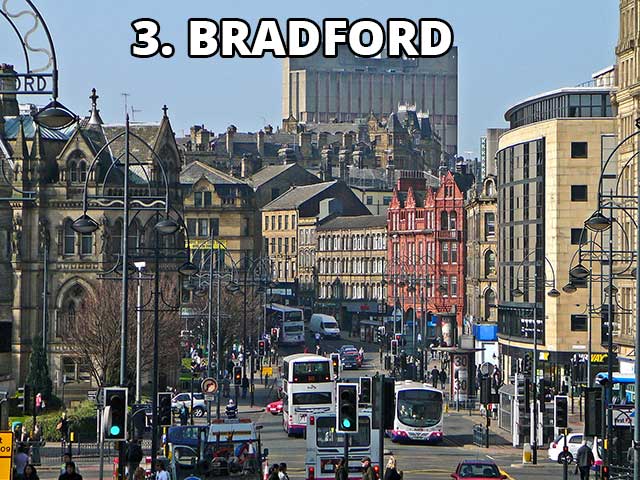
Roses need manure to prosper. The Yorkshire rose is fertilised by Bradford. Here’s what our readers have to say:
“I
have had the misfortune of living in the Bradford area for most of my
life and can honestly say anyone disagreeing with this has either never
been there, is delusional or is a smacked up chav”-----------------------------------------------------------------------------
Just muttering the name of this place conjures up ever
negative image you have of the arse end of South London. Here’s what
our readers have to say:
“Croydon
and many parts of the UK are descending into s**t with this underclass
of backward sheep filth that are the chavs – and this is the future of
the country – we are f**ked”-----------------------------------------------
Once known as the ‘murder mile’, Hackney in East London
has been slipping down the chart as it becomes more and more gentrified.
Here’s what our readers have to say:
“I’m staying with a friend who lives in Hackney (near Hackney Ctrl Tube Station)… is it really the worst place in the UK”-------------------------------------------------------
The festering cat turd in the Garden of England,
Gavesend has always featured in our Top 10 since 2004. Here’s what our
readers have to say:
“Gravesend
is populated by the most grotesque, loathsome, vile and vulgar
sub-human vermin that one could ever have the misfortune to come across.
The vast majority of its inhabitants (chavs and pikies) are foul,
hateful, and degraded beings who, in evolutionary terms, have not
evolved much from the amoeba”-------------------------------------------------------------
Such a salubrious part of Greater Manchester, it is
rumoured that the BBC had security guards escort staff to their cars or
tram stop. Here’s what our readers have to say:
“the
biggest crime infested shithole of all time, yes this is salford, the
town so famous for being a chav Mecca, that they made the programme
shameless to take the piss out of the locals”---------------------------------------------------------------
Apart from a seemingly flourishing tourist trade fuelled
mainly by Americans looking for the Sherif, Nottingham is widely
regarded as a bit of a dump. Yet this is only its second year in the
Top 10. Here’s what our readers have to say:
“easily the least friendly, intolerant city I have ever had the displeasure of inhabiting”------------------------------------------------------------
Situated about half-way between Manchester and Birmingham, “the Shithole of Staffordshire” has been hanging around the lower reaches of the Top 10 for the last five years. Here’s what our readers have to say:
“How can you describe Stoke? Well if the actual World needed an enema, Stoke-on-Trent would be where they shove the pipe”------------------------------------------------------------
Some say Barking & Dagenham is the rough diamond of the East End, we like to think of it as a flawed gem. Here’s what our readers have to say:
“Dagenham has all the charm of a fetid pool of primordial muck. If Chav heaven is in Romford, then Dagenham is the gateway between heaven and hell.”
We have now been compiling our Top 10 worst places to live in England list for the last decade. There is no scientific method to all this, we just go by the volume of comments and local press outrage (because they know it’s true). Think we’ve missed out a town or city? Think we have our Top 10 all wrong? Post your corrections in the comment section for our consideration. If your nomination makes it into the list, we’ll inform the local press and kick up a stink. Offending local councillors, dignitaries and meddlesome ratbags plus ruining the trade of slime ball estate agents, makes our day! So for 2015 we present our definitive Top 10 of the worst god-awful hell holes in England, enjoy.
http://www.ilivehere.co.uk/top-10-worst-places-to-live-in-england/
-------------------------------------------------------------------
Tuesday, 14 July 2015
ALL ABOUT EARTHSHIPS
Garbage Warrior ALL ABOUT EARTHSHIPS - Full Length Documentary
https://www.youtube.com/watch?v=tmy_QipSQhc
Bas Meeuws at the exhibition 'Expect | Monument MH17 - Sunflower Bouquet'
14 July 2015
Sunflowers
are displayed in front of the artwork by artist Bas Meeuws at the
exhibition 'Expect | Monument MH17 - Sunflower Bouquet' in the modern
visual art Museum Jan van der Togt in Amstelveen, The Netherlands. The
flowers refer to the disaster site in Ukraine where the Malaysia
Airlines Boeing 777 with flight number MH17 crashed on 17 July 2014. The
exhibition runs 16 to 26 July
EPA/REMKO DE WAAL=============================
17 June 2015
Visitors look at various artworks during the VIP opening day at Art Basel, Switzerland
Michele Tantussi/Getty Images=======================================================
Tuesday, 7 July 2015
Swedish artist decorates creatures' shells to create a moving gallery
Stefan Siverud was worried about snails being crushed so he painted them
Lighthouses, crowns and company logos are among his intricate designs
Swedish artist has painted the shells of more than 70 of the tiny creatures
https://www.tumblr.com/search/stefan%20siverud
A Swedish artist has spent hours painstakingly creating minuscule works of art - on snails' shells.
Stefan Siverud was so concerned about the creatures getting crushed in his garden, he decided to paint more than 70 of them with bright colours.
Tiny lighthouses, crowns and company logos are among his intricate designs.
http://www.dailymail.co.uk/news/article-3151013/Swedish-artist-decorates-snails-shells-create-moving-gallery.html
==============================================================
=========================================================
===================================================
Stefan Siverud was worried about snails being crushed so he painted them
Lighthouses, crowns and company logos are among his intricate designs
Swedish artist has painted the shells of more than 70 of the tiny creatures
https://www.tumblr.com/search/stefan%20siverud
A Swedish artist has spent hours painstakingly creating minuscule works of art - on snails' shells.
Stefan Siverud was so concerned about the creatures getting crushed in his garden, he decided to paint more than 70 of them with bright colours.
Tiny lighthouses, crowns and company logos are among his intricate designs.
http://www.dailymail.co.uk/news/article-3151013/Swedish-artist-decorates-snails-shells-create-moving-gallery.html
==============================================================
=========================================================
===================================================
Subscribe to:
Posts (Atom)